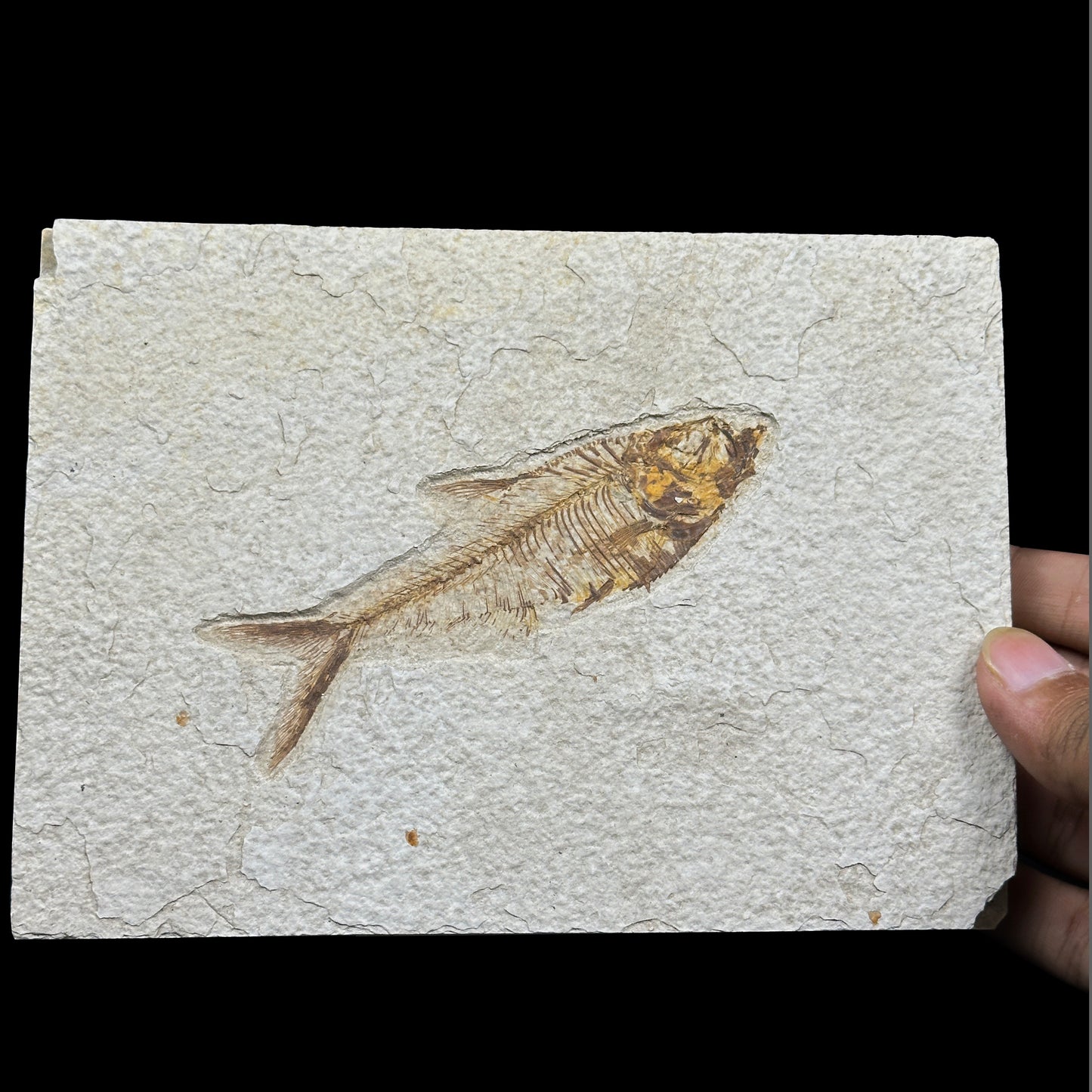
An amazing Diplomystus dentatus 52 Million Years Old Eocene Age Fossil Lake Mineral Specimen, preserved beautifully in natural stone matrix. This rare prehistoric fossil carries the mesmerizing beauty of ancient aquatic life from the Eocene Age, making it an extraordinary collectible for fossil enthusiasts, natural history lovers, and mineral specimen collectors. The detailed preservation of the fish skeleton and natural sedimentary texture creates a truly one-of-a-kind display specimen. A museum-quality collector specimen for sure.
1. General Description of Product:
This authentic Diplomystus dentatus fossil specimen dates back approximately 52 million years to the famous Eocene Age Fossil Lake deposits. The fossil showcases remarkable skeletal preservation with clearly visible spine structure, fins, and body formation naturally embedded within fine-grained sedimentary rock. Such prehistoric fossil specimens are highly valued because they offer a rare glimpse into ancient aquatic ecosystems that existed millions of years before modern civilization. The elegant contrast between the fossilized fish and the natural stone matrix gives this specimen an artistic and scientific appeal. Perfect for fossil collections, luxury interior décor, educational displays, museums, geology enthusiasts, or ancient history collectors, this genuine Fossil Lake specimen stands as a timeless piece of Earth’s natural history.
2. Zodiac Sign Suitability:
This ancient fossil mineral specimen is especially suitable for Scorpio, Pisces, Capricorn, and Aquarius among the 12 zodiac signs. These zodiac signs are often associated with wisdom, transformation, deep thinking, spirituality, and connection to ancient energies. Fossil specimens like Diplomystus dentatus are believed by many crystal and fossil collectors to inspire grounding, patience, knowledge, and connection with Earth’s evolutionary history. The specimen also symbolizes endurance and survival through millions of years of natural transformation.
3. Purpose & Energy Association:
This fossil mineral specimen is highly suitable for purposes connected with Spirituality, Protection, Peace, Academics, and Manifestation. Fossils are often admired for their grounding and stabilizing energy, helping create a calm and intellectually inspiring atmosphere. Students, researchers, historians, and spiritual practitioners frequently use fossil specimens as symbols of ancient wisdom, personal growth, and life transformation. Keeping this fossil in a study room, office, meditation space, or collection cabinet can inspire curiosity, learning, focus, and appreciation for Earth’s prehistoric beauty.
4. Chakra Connection:
This Diplomystus dentatus fossil specimen is primarily connected with the Root Chakra (Muladhara) and the Third Eye Chakra (Ajna). The Root Chakra association represents grounding, stability, and connection with Earth’s ancient energy, while the Third Eye Chakra connection symbolizes wisdom, knowledge, intuition, and understanding of the past. Many collectors and spiritual enthusiasts believe fossils help strengthen inner balance while enhancing awareness of nature, time, and evolution.
5. Natural & Unique Beauty:
The natural beauty of this fossil lies in its extraordinary prehistoric preservation and earthy fossilized texture. The golden-brown skeletal structure standing out against the soft natural sedimentary stone creates a visually stunning contrast that immediately captures attention. Every detail—from the delicate spine to the ancient fin structure—has been naturally preserved over millions of years, making each fossil completely unique and irreplaceable. Its authentic Eocene Age origin and naturally aged appearance give this specimen a rare scientific, artistic, and collectible value that makes it truly exceptional for serious fossil collectors and natural history enthusiasts.